A procurement-grade site for an engineering firm
This is a marketing website (a fixed-price deliverable, publicly live and indexable) for an Australian asset-integrity and corrosion-engineering firm whose buyers are defence, oil and gas, mining and government procurement teams. It is honestly a brochure site: ten pages, no accounts, no database, no e-commerce. Its one moving part is a contact form that emails an enquiry. The value here isn't scale. It's craft and clarity: a register that reads like an engineering practice rather than a creative studio, real project and client content instead of stock, and the small number of things that do run built so they don't fail quietly. Everything below is described against the running code and the live site, as mechanisms, not a pitch.
The problem
Engineering firms are judged, by a procurement audience, on whether the work looks credible before anyone reads a word. The firm needed a site that read like an asset-integrity practice: sober, standards-led, benchmarked against the large engineering groups its buyers already trust. Not the animated, creative-studio look that signals 'agency' to a defence or oil-and-gas reviewer. Getting that register right was most of the job, and it isn't a template setting.
The rest of the brief was narrow but unforgiving. Local search visibility was a contractual requirement, so the SEO surfaces (sitemap, robots, structured data, per-page metadata) had to be real, not decorative. The one dynamic surface, an enquiry form, is the only path a lead has into the business; a form that silently swallows a submission is worse than no form. And because the firm takes possession of the whole thing at launch, the site had to be plain content over code that a non-developer could hand off and keep, with no rented platform owning the data or the roadmap.
What we built
A ten-page static-first site on Next.js 16, with every page's copy and imagery driven from plain content files rather than hard-coded in components, so swapping real content is a data edit, not a rebuild. The pages are prerendered for speed and search; the only dynamic route is the enquiry API. On top sits the SEO layer the contract required, an indexing gate that keeps the site out of search until it's meant to be found, and a contact form built to fail loud rather than lose a lead.
An engineering register, not a studio one
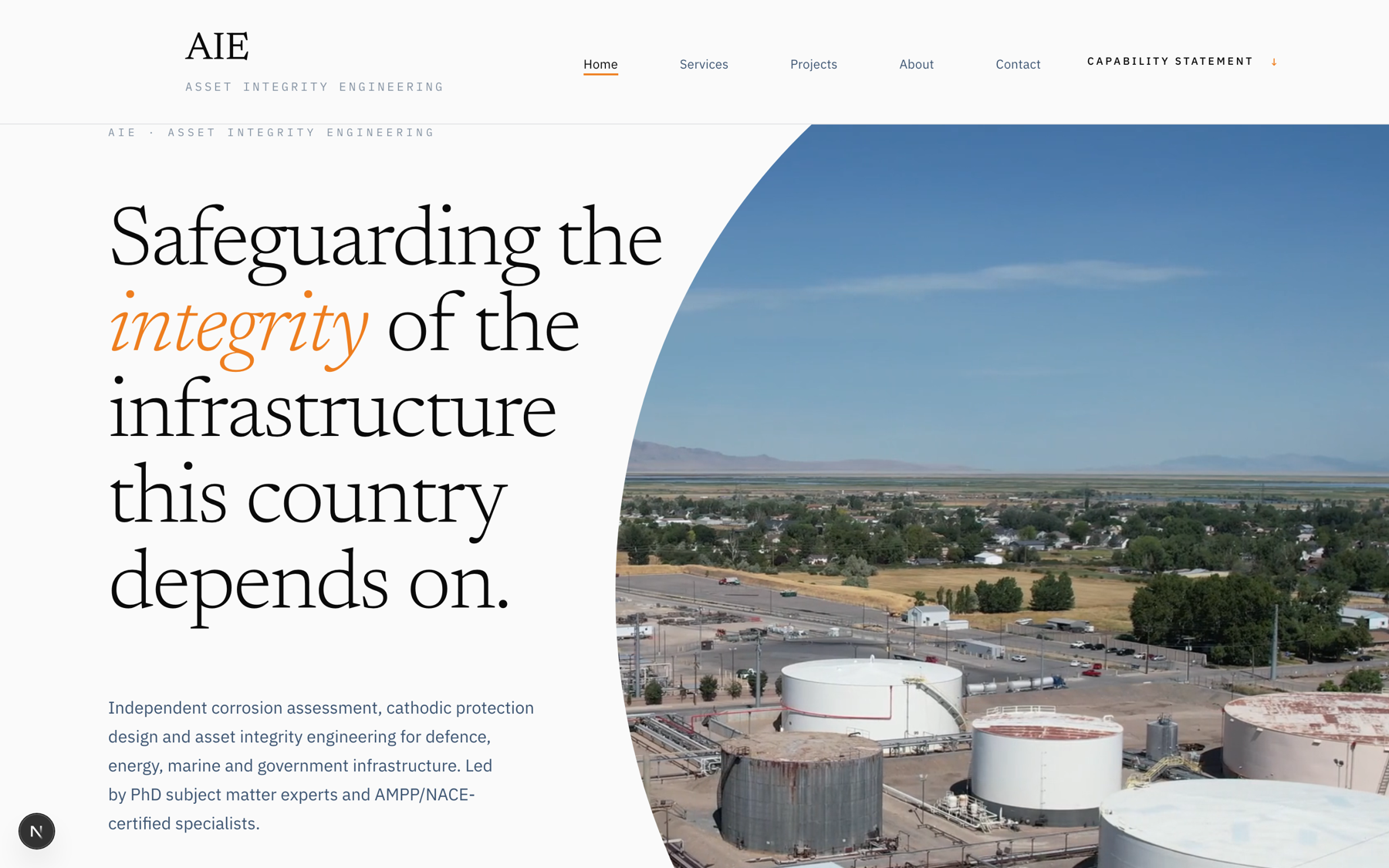
The design was deliberately pulled toward the large engineering groups the firm's buyers already know: a solid, standards-led hero, bold uppercase headings, a single brand accent carried across every service rather than a different colour per section, and all-sans typography matching the firm's own capability statement. Motion is restrained scroll animation that respects reduced-motion and works with no JavaScript; an earlier smooth-scroll library was removed once it hurt responsiveness on the engineering workstations this audience actually uses. The choices are documented against the reference set, not improvised.
Real work, real clients, a real capability statement
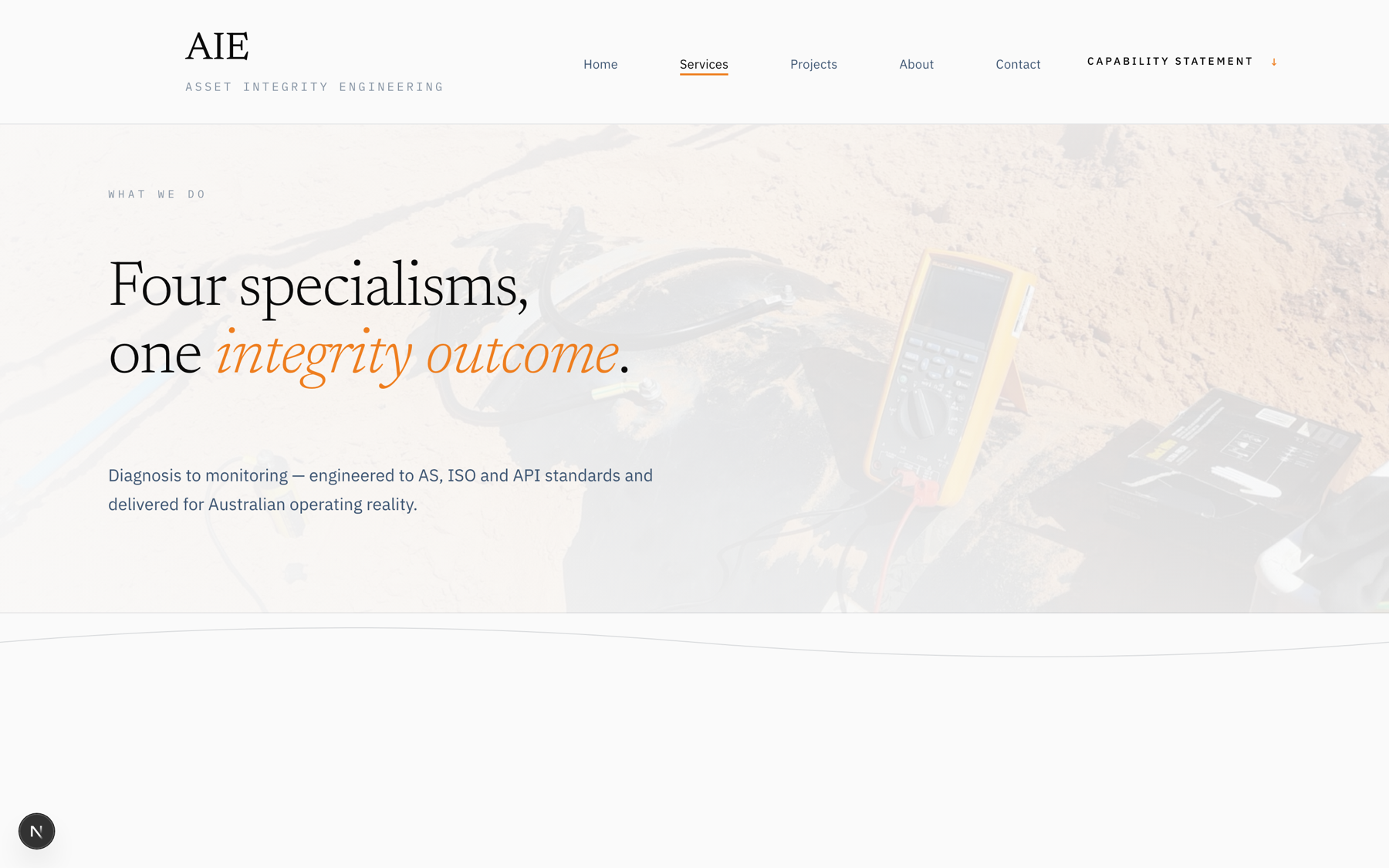
The site carries the firm's actual project record (a set of named projects with their client, location and sector), its real client list, contact details and accreditations, and a downloadable capability statement PDF linked straight from the header. None of it is placeholder. The service lines are structured content too, so the firm can extend or re-order them without touching a component.
A contact form that won't lose a lead
The single dynamic surface is an enquiry form wired to email through Resend. It validates every field server-side, carries a honeypot to absorb bots, and rate-limits abusive submissions. Critically it fails loud: if email delivery isn't configured, the endpoint returns an explicit error and the page falls back to a plain mailto link, rather than accepting the form and dropping the enquiry into nothing. A lead is the only thing this site is for, so it's the one thing built not to fail silently.
SEO surfaces that are real, because the contract required them
Local-search visibility was a contractual deliverable, so it's built properly: a served sitemap and robots file, structured JSON-LD, a generated Open Graph image, and per-page metadata across the site. These aren't a plugin's defaults: they emit the firm's real name, address and service keywords, which is what a procurement search actually needs to surface.
Opt-in indexing so it can't leak before launch
Search indexing is deliberately off by default and only turned on by an explicit environment flag at real launch. It is never inferred from the hosting environment, because a fresh project's first deploy already counts as 'production' and would otherwise let a half-finished site into Google. The block is enforced in three independent places at once, so no single missed setting can accidentally expose the site early. The preview build stays no-index; only the live domain is opened.
Plain content the firm can own and hand off
There's no database, no accounts, no CMS to license: the content lives in version-controlled files and the site is a static build on Vercel's Sydney edge. That's the point for a fixed-price handover: the firm takes possession of the repository and the hosting at launch, and there is no rented platform in the middle holding the data or dictating what changes cost. If the agency walked away, the site keeps serving.
Inside the build
Real screens from the running platform, captured with placeholder data.
The outcome
This is a polished marketing site, and we're honest that's all it is: no app, no scale story, no database to quote numbers from. Its strength is in the parts that are easy to do badly and hard to do well: a register that reads as an engineering practice rather than an agency, real project and client content instead of stock, SEO surfaces built properly because the contract required them, an indexing gate that can't leak the site early, and the one dynamic surface built so a lead can't vanish. It's a fixed-price deliverable, live and indexable at its own domain, and the firm owns the repository and hosting outright. If we walked away tomorrow it keeps serving.
Built with
Next project